
You probably watched Attack on Titan for the Titans, the chaos, and those “BRO WHAT JUST HAPPENED?” moments.
But here’s the crazy part: some of the biggest clues weren’t hidden in some impossible-to-find corner.
They were right there.
In the background.
In the dialogue.
In tiny details most of us completely ignored.
And once you notice them, some scenes hit very differently.
1. Attack on Titan Was Foreshadowing Its Own Ending
Warning: major Attack on Titan spoilers ahead.
Remember the very first episode?
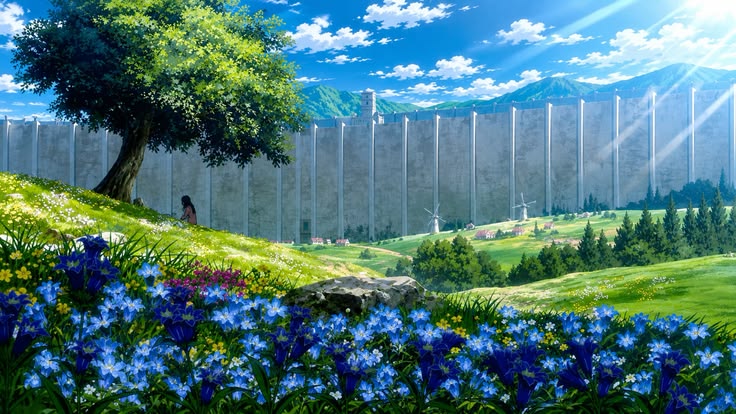
Eren wakes up under that huge tree, crying, while Mikasa is standing over him.
At first, it just feels like a weird dream.
After finishing the story, though? That scene becomes seriously unsettling.
Eren eventually gains access to memories that don’t behave like normal memories. Through the Attack Titan and the Paths, the past and future become connected, and Eren is able to influence what Grisha sees and does. The story later makes it clear that Eren’s actions are deeply connected to events that happened long before the version of Eren we knew in Season 1.
That’s what makes the opening so interesting.
We were watching Eren’s story before we understood what “memories” could actually mean in this world.
And that changes the way you look at the entire beginning.
The boy who wanted freedom beyond the walls eventually becomes someone whose choices affect the past, present and future.
The crazy part?
The story didn’t suddenly become complicated at the end. It had been teaching us the rules of its world long before we understood why those rules mattered.
That’s one reason a rewatch of Attack on Titan feels so different.
2. The “Random” Details That Were Actually Clues 👀
2. The “Random” Details That Were Actually Clues 👀One of Attack on Titan’s biggest tricks is making important information look completely ordinary.
A strange conversation.
A weird Titan.
A tiny detail in someone’s memory.
You don’t always realize something matters until the story gives you the missing piece hundreds of chapters later.
Take the world itself.
Early on, we’re encouraged to think of the Titans as almost mindless monsters. But the story keeps quietly showing us that the Titan system is much stranger than that. Some Titans behave abnormally, while others can even communicate. Isayama later explained that he originally imagined “normal” Titans almost like programmed beings, with abnormal Titans functioning like a kind of “glitch.”
And then there’s the information we don’t get.
Attack on Titan constantly makes you ask:
Why is this character hiding that?
Why does this person know something they shouldn’t?
Why are we seeing this scene from this particular perspective?
That last one becomes especially important after the story moves beyond the walls.
Instead of immediately explaining everything, Isayama deliberately shifts the perspective toward characters we previously considered enemies. He has said that this perspective change was intentional: he wanted viewers to understand the people on the other side before bringing the original protagonists back into the story.
So when you rewatch Attack on Titan, don’t just watch the big reveals.
Watch who knows what.
Sometimes the biggest clue isn’t the thing a character says.
It’s the thing they shouldn’t have known in the first place.
3. Eren’s Journey Wasn’t What It First Looked Like
At the beginning, Eren seems simple.
He hates the Titans.
He wants freedom.
He wants to see what’s beyond the walls.
Easy, right?
Not even close.
As the story unfolds, Eren’s relationship with freedom becomes much darker and more complicated. The person who once dreamed about reaching the outside world eventually becomes one of the most important forces shaping what happens to that world.
And this is where the Attack Titan’s memory ability changes everything.
Eren isn’t simply remembering his own past. Through the Attack Titan and the Paths, memories can connect people across different points in time. That becomes crucial when Eren’s influence reaches Grisha.
Suddenly, earlier scenes aren’t just “old Eren.”
They’re pieces of a story we didn’t understand yet.
That’s what makes Eren’s character so interesting on a rewatch: you can see the same obsession with freedom, but now you know where the story is heading.
The question stops being:
“Will Eren finally become free?”
And becomes:
“What is Eren willing to do for freedom?”
4. The Background Details You Probably Missed
Attack on Titan loves hiding information in plain sight.
The world isn’t just there to look cool. Maps, uniforms, architecture, military structures and even the way different groups are represented help build the larger history of the world.
Isayama has explained that when designing the world, he used similarities to real-world history so audiences could understand the context without everything needing to be explicitly explained. He specifically discussed the parallels between Eldians and Marleyans and historical peoples.
So on a rewatch, try something different:
Stop watching only Eren. Watch the world around him.
Who is standing in the background?
What symbols are visible?
What information is being casually mentioned?
Which characters already seem to know more than they’re saying?
Because in Attack on Titan, “background information” has a habit of becoming main-plot information later.
5. Why These Moments Hit Different on a Rewatch
The first watch is about survival.
The second watch is about noticing.
The first time, you’re asking:
“Who’s going to die?”
On a rewatch, you’re asking:
“Wait… how did I not notice that?”
That’s the difference.
Once you know the truth about the Titans, the walls, Marley, the Paths and Eren’s final direction, earlier scenes suddenly carry completely different weight.
A line that sounded normal can feel like foreshadowing.
A character’s reaction can suddenly look suspicious.
A scene you thought was emotional can become terrifying because you now understand what the characters don’t.
And that’s exactly why Attack on Titan rewards rewatches.
You aren’t just watching the same story again.
You’re watching it with information the characters—and your first-time self—didn’t have.
So… How Much Did We Actually Miss?
And that’s probably the most insane thing about Attack on Titan:
the story doesn’t just want you to watch it.
It wants you to notice it.
Because once you know what to look for, going back to those early episodes feels like watching a completely different story.
And honestly?
That’s when the real rabbit hole begins. 👀